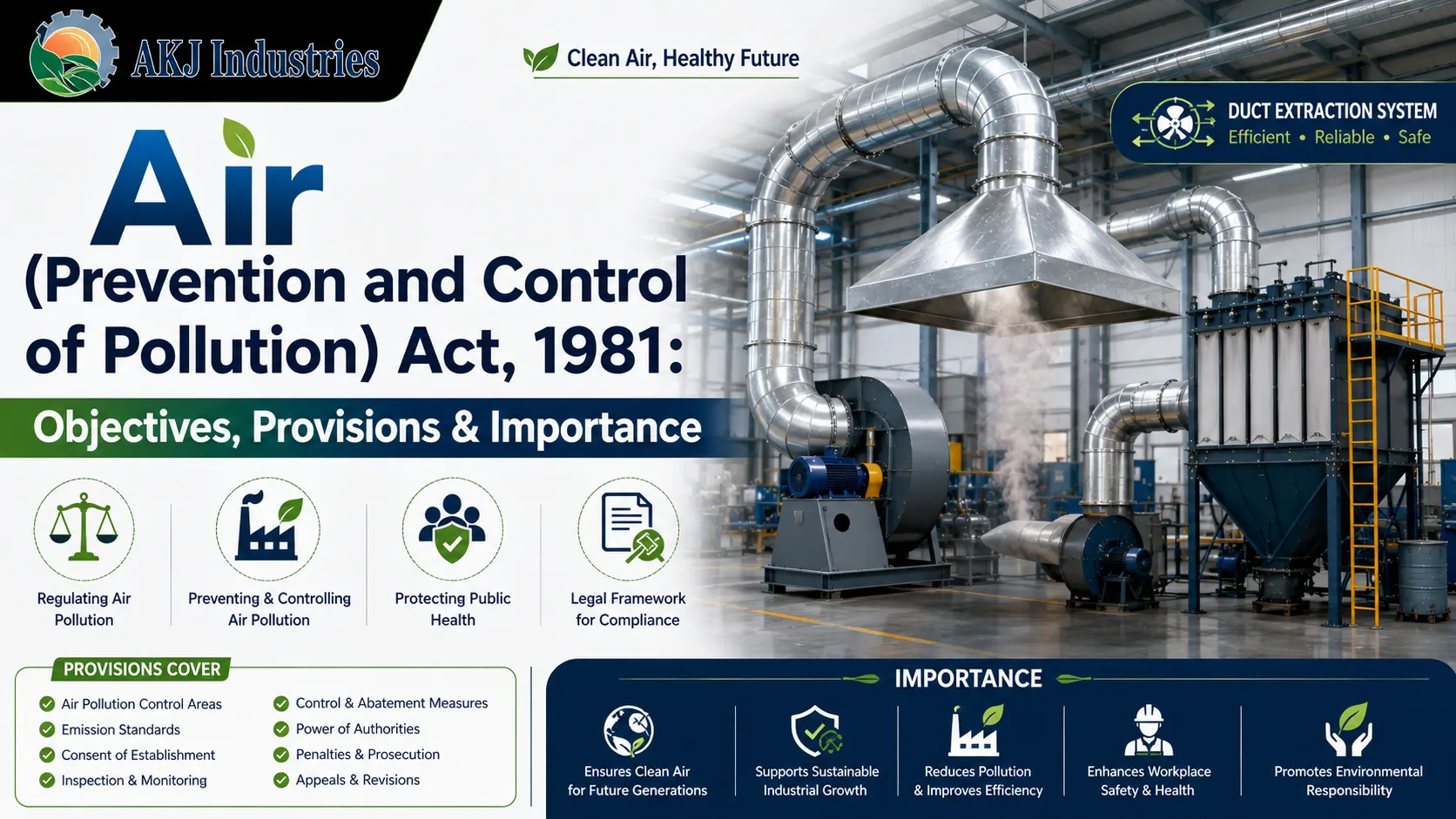
Air pollution is one of the major environmental challenges faced by cities and industries across India. Emissions from factories, manufacturing units, power plants, vehicles, construction activities, and other sources can affect air quality and create serious risks to human health and the environment. To control and prevent air pollution in the country, the Government of India introduced the Air (Prevention and Control of Pollution) Act, 1981.
The Act provides a legal framework for controlling air pollution, regulating industrial emissions, and empowering pollution control authorities to take necessary action against activities that may harm air quality.
What is the Air Prevention and Control of Pollution Act, 1981?
The Air (Prevention and Control of Pollution) Act, 1981 is an important environmental law in India created to prevent, control, and reduce air pollution. It provides powers and responsibilities to the Central Pollution Control Board (CPCB) and State Pollution Control Boards (SPCBs) for monitoring and controlling air pollution.
With the rapid growth of industrialization, air pollution has become a major environmental concern in India. To control air pollution caused by industrial activities, the Air (Prevention and Control of Pollution) Act, 1981 was introduced. Along with regulatory measures, industries now use advanced technologies such as dust extraction systems, bag filters, scrubbers, and dust collectors to control industrial emissions and improve air quality.
The Act applies to industries and activities that release pollutants into the atmosphere. It helps establish emission standards and provides a system for regulating industrial plants operating in areas where air pollution needs to be controlled.
Main Objectives of the Air Act, 1981
The major objectives of the Air (Prevention and Control of Pollution) Act include:
- Preventing and controlling air pollution
- Improving the quality of air in different regions
- Controlling industrial emissions and air pollutants
- Empowering pollution control boards to monitor air quality
- Regulating industries operating in air pollution control areas
- Establishing emission standards for industrial activities
- Taking action against industries that fail to comply with environmental requirements
The overall purpose of the Act is to support cleaner industrial development while protecting public health and the environment.
Important Provisions of the Air Pollution Act, 1981
1. Role of Pollution Control Boards
The Act gives important responsibilities to the CPCB and SPCBs. These authorities are responsible for monitoring air quality, setting standards, inspecting industrial facilities, and taking necessary steps to control pollution.
State Pollution Control Boards also monitor industrial emissions and ensure that industries follow applicable environmental regulations.
2. Declaration of Air Pollution Control Areas
Under the Act, certain areas can be declared as Air Pollution Control Areas. Industries operating in these areas may need to follow additional requirements related to emissions and pollution control.
This provision helps authorities focus on regions where air quality requires greater protection and monitoring.
3. Consent to Establish and Operate
Industries that may release air pollutants generally need to obtain consent from the relevant State Pollution Control Board before establishing or operating their plants.
The consent process helps authorities evaluate the pollution potential of an industry and ensure that appropriate pollution control systems are installed.
4. Regulation of Industrial Emissions
The Act regulates the emission of air pollutants from industrial plants. Industries are required to follow prescribed emission standards and take suitable measures to prevent excessive release of pollutants into the atmosphere.
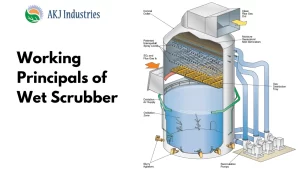
Depending on the industrial process, pollution control equipment may include dust collectors, bag filters, scrubbers, wet scrubbers, cyclones, and other air pollution control systems.
5. Inspection and Monitoring
Pollution control authorities have the power to inspect industrial plants, examine pollution control equipment, collect samples, and check whether an industry is complying with applicable requirements.
Regular monitoring helps identify pollution sources and encourages industries to maintain proper emission control systems.
Importance of the Air Pollution Act, 1981 for Industries
The Air Act is highly important for industries because it encourages businesses to manage emissions responsibly. Manufacturing and processing industries may generate dust, smoke, fumes, gases, and particulate matter during production.
Installing an effective dust extraction and air pollution control system can help industries:
- Reduce airborne dust and particulate matter
- Improve workplace air quality
- Control industrial emissions
- Protect workers from excessive dust exposure
- Support environmental compliance
- Reduce the spread of dust in surrounding areas
- Improve overall plant cleanliness
For industries that generate dust during material handling, grinding, cutting, mixing, crushing, processing, and manufacturing operations, a properly designed dust extraction system can play an important role in pollution control.
Role of Dust Extraction Systems in Air Pollution Control
Dust extraction systems are designed to capture dust and particulate matter at or near the source before it spreads into the workplace or surrounding environment. These systems generally use hoods, ducts, fans, filters, dust collectors, and discharge arrangements to collect and separate dust from the air.
The selection of a dust extraction system depends on factors such as:
- Type of dust generated
- Quantity of dust
- Industrial process
- Airflow requirements
- Particle size
- Operating conditions
- Required filtration efficiency
Dust collector, wet scrubber or bag filters some properly designed industrial systems not only supports cleaner air but also helps industries maintain better working conditions and efficient production areas.
Conclusion
The Air (Prevention and Control of Pollution) Act, 1981 plays an important role in controlling air pollution and regulating industrial emissions in India. The Act provides a legal framework for monitoring air quality, regulating industrial activities, and encouraging industries to adopt suitable pollution control measures.
For industries generating dust and particulate emissions, the use of suitable dust extraction and air pollution control systems is an important step toward cleaner and more responsible operations. AKJ Industries, as a leading Dust Extraction System Manufacturer, provides industrial solutions designed to help industries manage dust and improve air quality within their facilities.
By following environmental requirements and investing in appropriate pollution control equipment, industries can support sustainable growth while contributing to a cleaner and healthier environment.