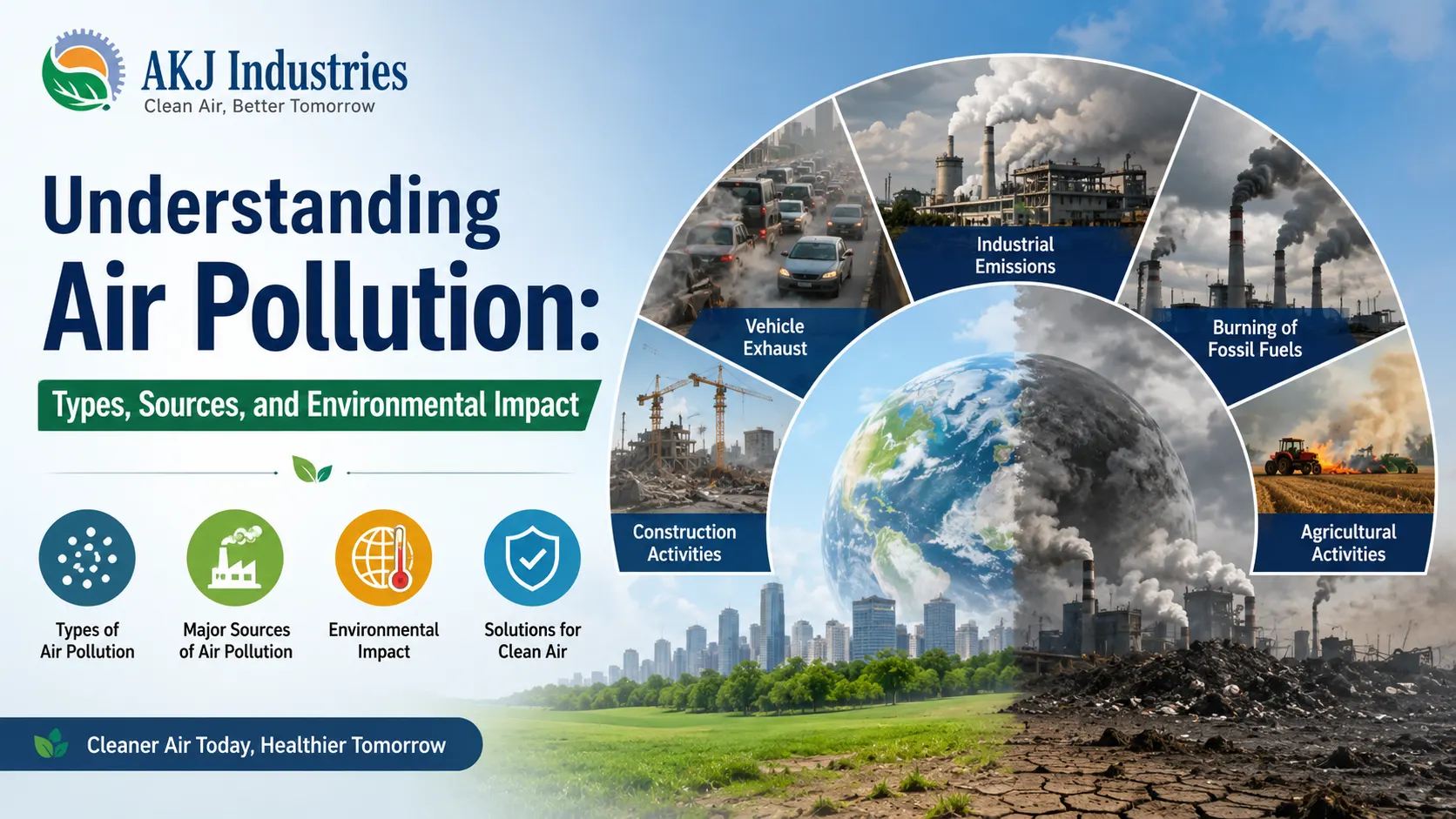
Air pollution has become one of the major environmental challenges affecting human health, industrial growth, and ecological balance worldwide. Rapid urbanization, increasing industrial activities, transportation emissions, and improper waste management have significantly contributed to rising pollution levels. Understanding the types, sources, and environmental impact of air pollution is essential for developing effective pollution control strategies and maintaining a healthier environment.
Industrial sectors play a major role in air pollution generation due to dust particles, smoke, harmful gases, and chemical emissions released during manufacturing processes. Industries such as cement plants, steel manufacturing units, foundries, pharmaceuticals, woodworking, chemical processing, mining, and power generation often produce airborne contaminants that can affect both workers and surrounding communities if not controlled properly.
What is Air Pollution?
Air pollution refers to the presence of harmful substances in the atmosphere that negatively affect living organisms, natural resources, and environmental quality. These pollutants may exist in the form of gases, dust particles, fumes, smoke, or biological contaminants. Polluted air can lead to respiratory diseases, climate change, acid rain, and damage to ecosystems.
Types of Air Pollution
1. Particulate Matter Pollution
Particulate matter includes tiny solid or liquid particles suspended in the air such as dust, smoke, soot, and metal particles. Industrial grinding, cutting, crushing, and material handling operations are common sources of particulate pollution.
2. Gaseous Pollution
Industries and vehicles emit harmful gases such as carbon monoxide (CO), sulfur dioxide (SO₂), nitrogen oxides (NOx), and volatile organic compounds (VOCs). These gases contribute to smog formation and respiratory disorders.
3. Indoor Air Pollution
Indoor pollution is caused by chemicals, poor ventilation, smoke, and industrial dust accumulation inside factories and workspaces. Workers in industrial environments are often exposed to harmful airborne particles without proper filtration systems.
4. Biological Pollution
Biological pollutants include bacteria, mold spores, pollen, and airborne microorganisms that can affect air quality in industrial and residential areas.
Major Sources of Air Pollution
Industrial Emissions
Industries are one of the biggest contributors to air pollution due to manufacturing processes that release smoke, dust, fumes, and harmful gases into the atmosphere. Cement plants, foundries, chemical industries, and metal processing units generate particulate matter during grinding, cutting, welding, and material handling operations.
Vehicle Exhaust
Automobiles release pollutants such as carbon monoxide, nitrogen oxides, hydrocarbons, and particulate matter through fuel combustion. Increasing traffic congestion in urban areas significantly raises air pollution levels and contributes to smog formation. Diesel vehicles especially produce fine particles that can cause respiratory and cardiovascular problems.
Construction Activities
Construction and demolition activities generate large amounts of dust particles from excavation, drilling, concrete mixing, and transportation of materials. Fine dust from construction sites spreads easily through the air and reduces surrounding air quality. Continuous exposure to construction dust can also impact worker safety and nearby residential areas.
Burning of Fossil Fuels
Coal, diesel, petrol, and natural gas are commonly burned in industries, thermal power plants, and vehicles for energy generation. This combustion process releases harmful gases like sulfur dioxide and carbon dioxide, contributing to air pollution and climate change. Fossil fuel burning is also one of the major causes of greenhouse gas emissions worldwide.
Agricultural Activities
Agricultural practices such as crop residue burning, excessive fertilizer use, and pesticide spraying contribute to air pollution in rural and nearby urban areas. Burning crop waste releases smoke and fine particulate matter into the atmosphere, affecting air quality during harvesting seasons. Agricultural emissions also include ammonia and other gases harmful to the environment.
Environmental Impact of Air Pollution
Air pollution affects both the environment and public health in multiple ways:
- Causes respiratory and cardiovascular diseases
- Reduces air quality and visibility
- Contributes to global warming and climate change
- Damages crops, forests, and aquatic ecosystems
- Leads to acid rain formation
- Affects industrial workers through long-term dust exposure
Industrial dust pollution especially creates hazardous working conditions if proper air filtration systems are not installed.
Importance of Dust Collection Systems in Industries
To control industrial air pollution, many industries use advanced dust collection and filtration systems. Dust collectors help capture airborne particles before they spread into the workplace or environment. These systems improve air quality, protect workers, increase equipment life, and help industries comply with environmental regulations.
AKJ Industries is known as a reliable dust collector manufacturer offering efficient industrial air pollution control systems for various industries. Our dust collection solutions are designed to handle fine dust, smoke, fumes, and industrial airborne contaminants generated during manufacturing operations.
Industries commonly use dust collectors in:
- Cement Plants
- Pharmaceutical Industries
- Metal Processing Units
- Woodworking Industries
- Food Processing Plants
- Chemical Manufacturing Units
- Powder Coating Plants
- Textile Industries
Modern dust collectors help maintain cleaner production environments, reduce maintenance costs, and improve operational efficiency.
Conclusion
Air pollution continues to be a serious environmental concern caused by industrial emissions, transportation, fossil fuel combustion, and construction activities. Effective pollution control measures, especially in industrial sectors, are essential for reducing airborne contaminants and protecting environmental health. Advanced filtration and dust collection systems play a critical role in maintaining clean air and safer industrial workplaces.
With increasing awareness about environmental sustainability, industries are adopting efficient pollution control technologies to reduce emissions and improve workplace safety. AKJ Industries provides advanced dust collector systems that support industries in maintaining cleaner, safer, and environmentally responsible operations.